Pages

Thursday, January 1, 2015

Sweeping leaves on a windy day


The baggage compartments do not line up with the seating arrangements on Singapore Airlines flight SQ0246. At least not on this aircraft, and not in coach class. They would line up if the arrangement was 2/4/2 (where / = aisle). But the arrangement is 3/3/3. Maybe there’s been a refit to squeeze an extra seat into each row.


India. She welcomes me with a familiar indifference. As usual, she is busy. She's always busy. She attends to her people as they move about in a kaleidoscope of colour and sound. There is much to do. I step into the noise and feel her warmth against my breast. I kiss her gently on the cheek. 

She turns to me and smiles.

Samrat calls out. We greet each other. Samrat is quick to inform me that I need to "freshen up" and eat something at his place before travelling onwards. I meet his wife, his two sons, and his parents and have some masala chai. I'm not exactly sure what I ate at Samrat's place but it was both sweet and savoury. And delicious. India delights my senses. Although we are in a rush I have enough time to sip through another cup of hot, spiced tea.


We travel to Amravati to meet up with Dilip and his team. They arrived a couple of days earlier and have made good use of the time.


Road trippin’.

Children’s orphanage, Nagpur.

Justine makes some splints.


Justine, Penny, Kath.

Dilip.

Visit to an animal shelter.


Avinash and friends, Amravati.


We leave for the camp in the early morning. The sun hides behind a low lying haze and lights up a contrail as a brilliant gash in a cloudless sky. A pig snuffles through some trash. Dogs stretch out lazily beside the road. People are everywhere. Cows and buffalo roam freely. 

As we approach the camp the traffic thins and the din of horns (used to indicate a vehicle’s presence and intention for road markings play a negligible role in India) die down. A cacophony of noise that disorientates a newcomer becomes recognisable as a conversation between individual vehicles. An enormous number of small trucks ply the roads of India. Narendra Modi may have chosen a good time to put an end to fuel subsidies but he clearly has his work cut out.


Road trippin’ 2.


The camp is set in a tiger reserve. As usual we do not see any tigers. As usual the girls are disappointed (incomprehensible given the smallness of the transport vehicles and the conspicuous absence of brawn or weaponry on their male companions). But we do see monkeys. Lots of monkeys.


We arrive at the camp by midday. We are met by Ashish and Kavita. There is significant building work in progress. Smack bang in the middle of the hospital complex rises a concrete structure that will house an ICU and gynaecological unit. Just five hundred meters down the road a large university hospital (where Ashish works as a professor) is being constructed. Six kilometers in the opposite direction yet another hospital is being built by Ravi. The region is losing its rural charm: trading up for infrastructure with the capacity to do much good. 

The clinic has already started to fill. 


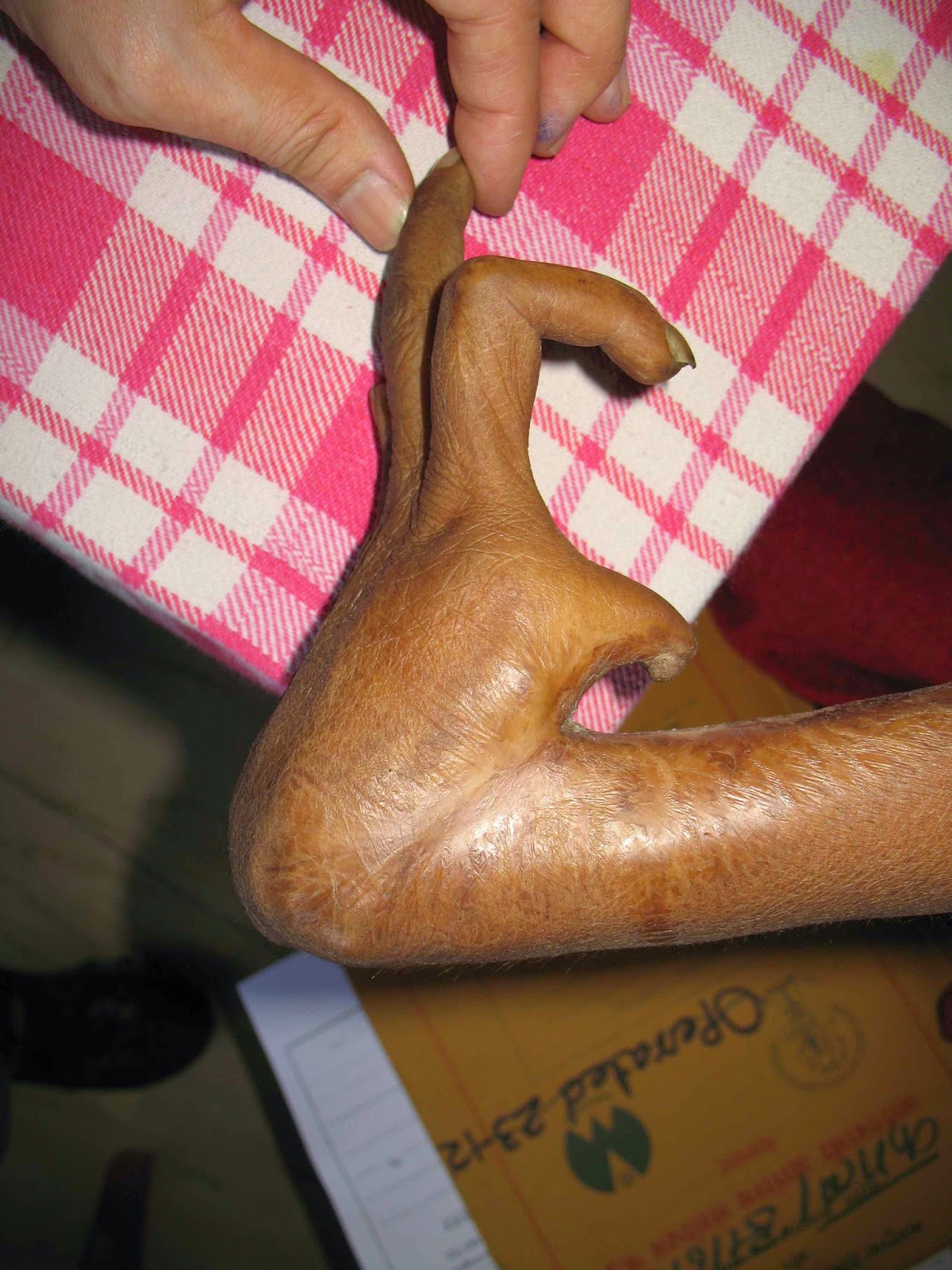
There are many post-burn contractures (PBC) at this camp.


Right hand released last year. Left hand to do this year.


Most PBC cases are not quite as challenging.


PBC chest and neck.


Minor PBC of the axilla.


PBC leg.

 PBC foot.


Remember this girl from last year?


Still some work to do to achieve a functioning hand.


Blast injury from a firecracker.

Missing thumb, amputated index, fixed contracture of the middle finger. Although similar in appearance to a PBC this is altogether a different beast. We elect to release the contracture first (which is difficult enough). Some might argue that a pollicisation of the index would have been a better option. But the length of the amputated index would have meant a web reconstruction. And the lack of intra-operative screening would make a challenging procedure even more so. As it turns out the middle finger only has a radial neurovascular bundle (the ulnar side presumably blown off). Must remember this should this boy come back for more surgery.


Incomplete syndactyly.


Polydactyly.


Club feet for Ponseti casting.

Osteomyelitis following a fracture. Not suitable for surgery at this camp.

Femoral torsion. Not suitable for surgery at this camp.

Poorly demarcated lesion (inflammatory or neoplastic) on the lateral aspect of the arm with radial nerve involvement.

I argue whether it is safe to proceed without better imaging. 
Turns out to be one of the most grateful patients at the camp.

Epigastric hernia.

Cancer of the oral cavity with involvement of the mandible.

Many villagers are illiterate. Consent for surgery can still be given. 


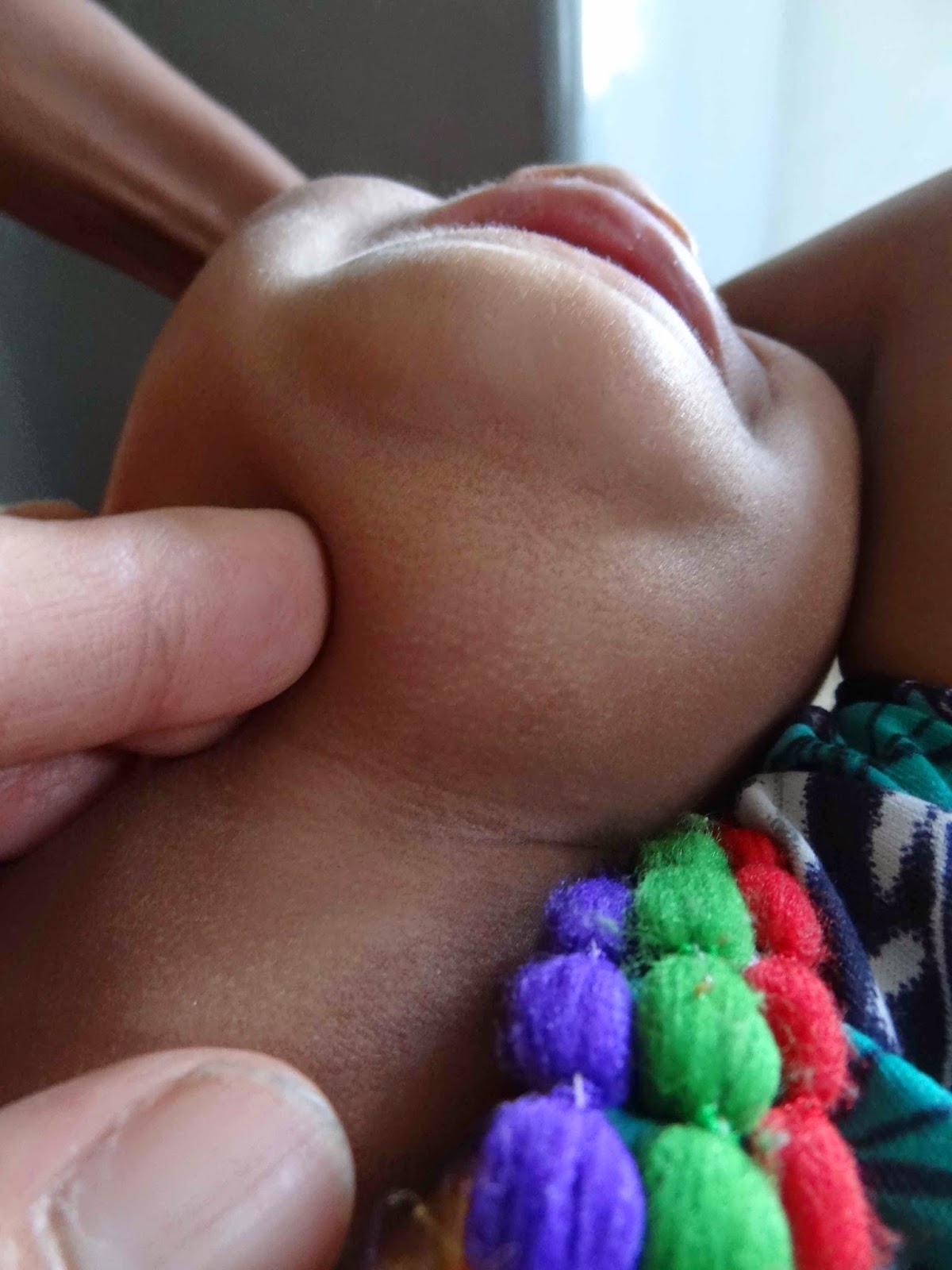
Cleft lip.


A multitude of lumps and bumps.


Keloid scarring.


Justine has set up a splint table just outside theatres. It is regularly dismantled whenever she leaves to attend to patients.


The next morning is Christmas day. We have some time before the anaesthetists arrive from Pune, Amravati, and Nagpur. 


Athang has built his own batteries (charged by solar panels) and attached them to a hub motor on his bicycle.
It can do 30km at a decent speed with the two batteries fully charged.

Dilip has a go. The bike must weigh 50kg and the left crankarm is loose.

Pedalling is like so yesterday..

Christmas Melghat style.

The team from the Gold Coast.


Time for theatres to start. We have enough work to keep us busy for three days. 


The girls sneak out with Dilip to visit Ravi and check out his cotton farm and new hospital.


Dilip and Smita.

Dilip and Ravi.


Ok. That’s quite enough girls.


Back at the camp.

Gopal (specialist oncology surgeon) takes out an oral cancer involving the mandible.

Hemi-mandilectomy with a near bloodless field. 
I ask Gopal how he feels about doing such a large procedure within the constraints of a camp hospital with no facilities for a blood transfusion. He tells me he has brought along his own cautery machine. Holy shit. It takes more than just a good cautery machine my friend. It takes experience, good hands and balls of steel. 
You, sir, have my utmost respect.


Gopal.

Another hemi-mandibulectomy. This one with a lymph node dissection.


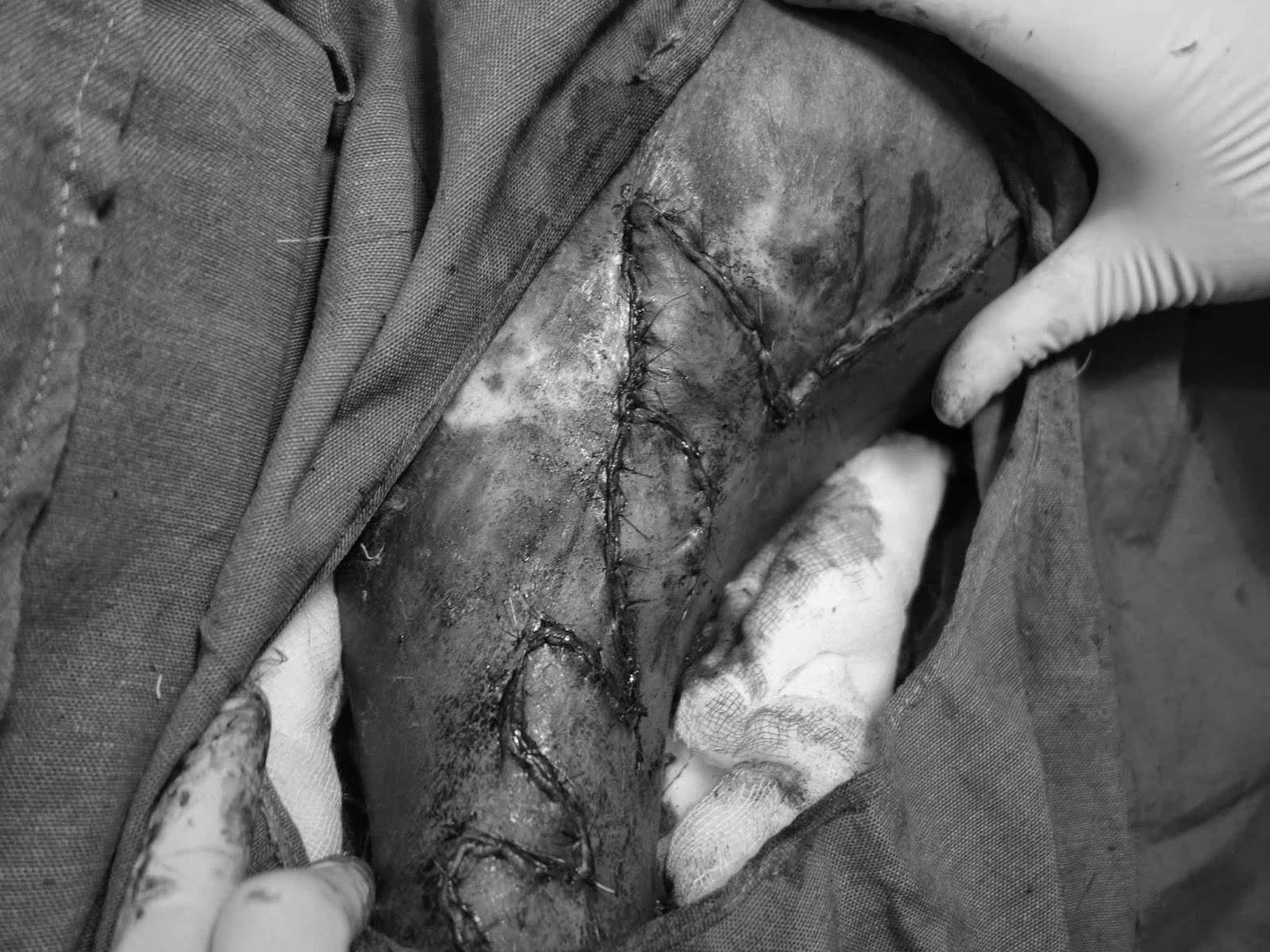
A pec major flap is needed to close the wound. Sheilesh is up for it.


The other tables (thankfully) carry smaller cases.

The girls get back to it.


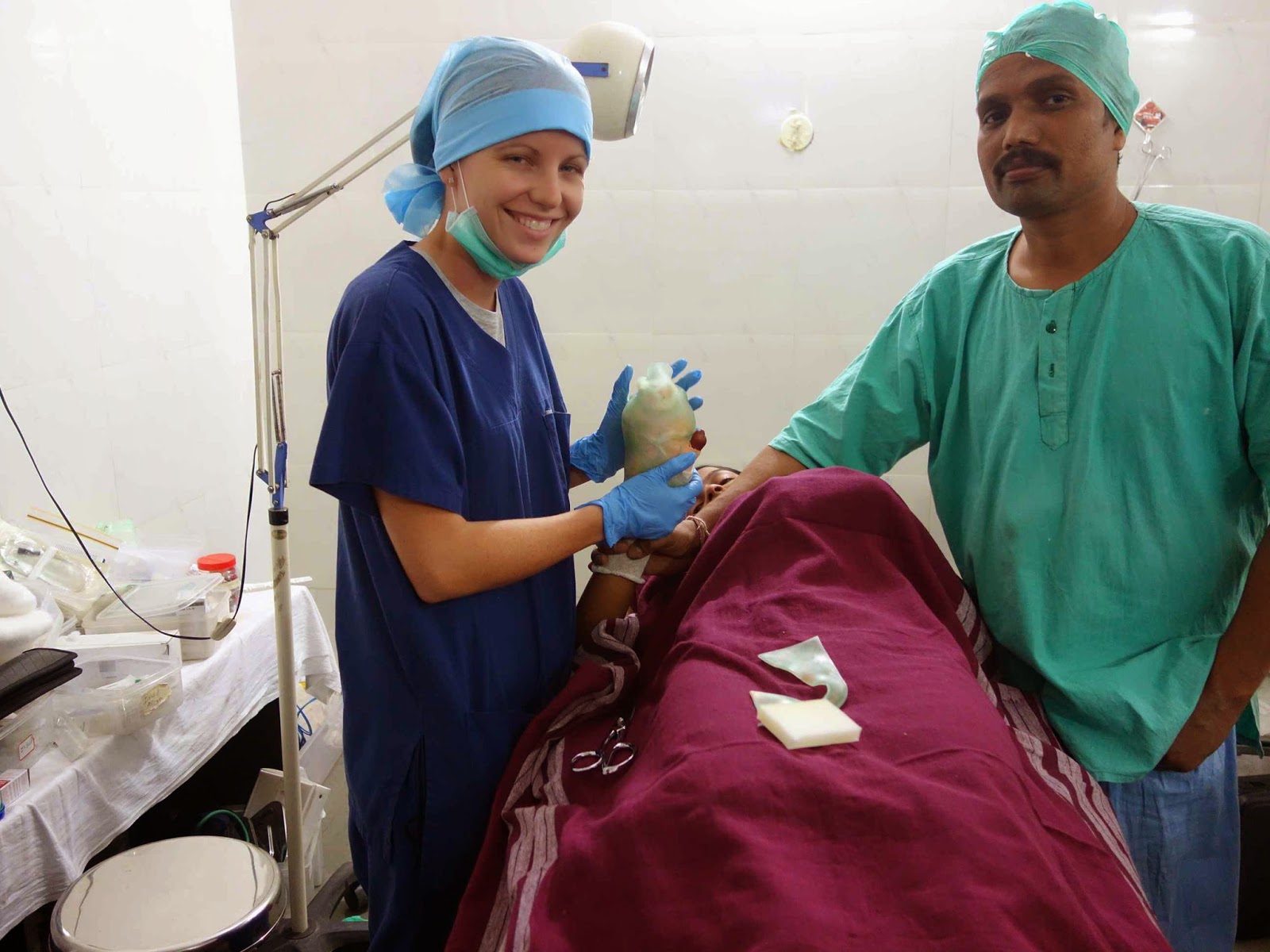


The next morning we take a walk to the river.


So this is where our food comes from.


Hey Sheilesh! I bet you a $100 that you can’t climb that pillar.


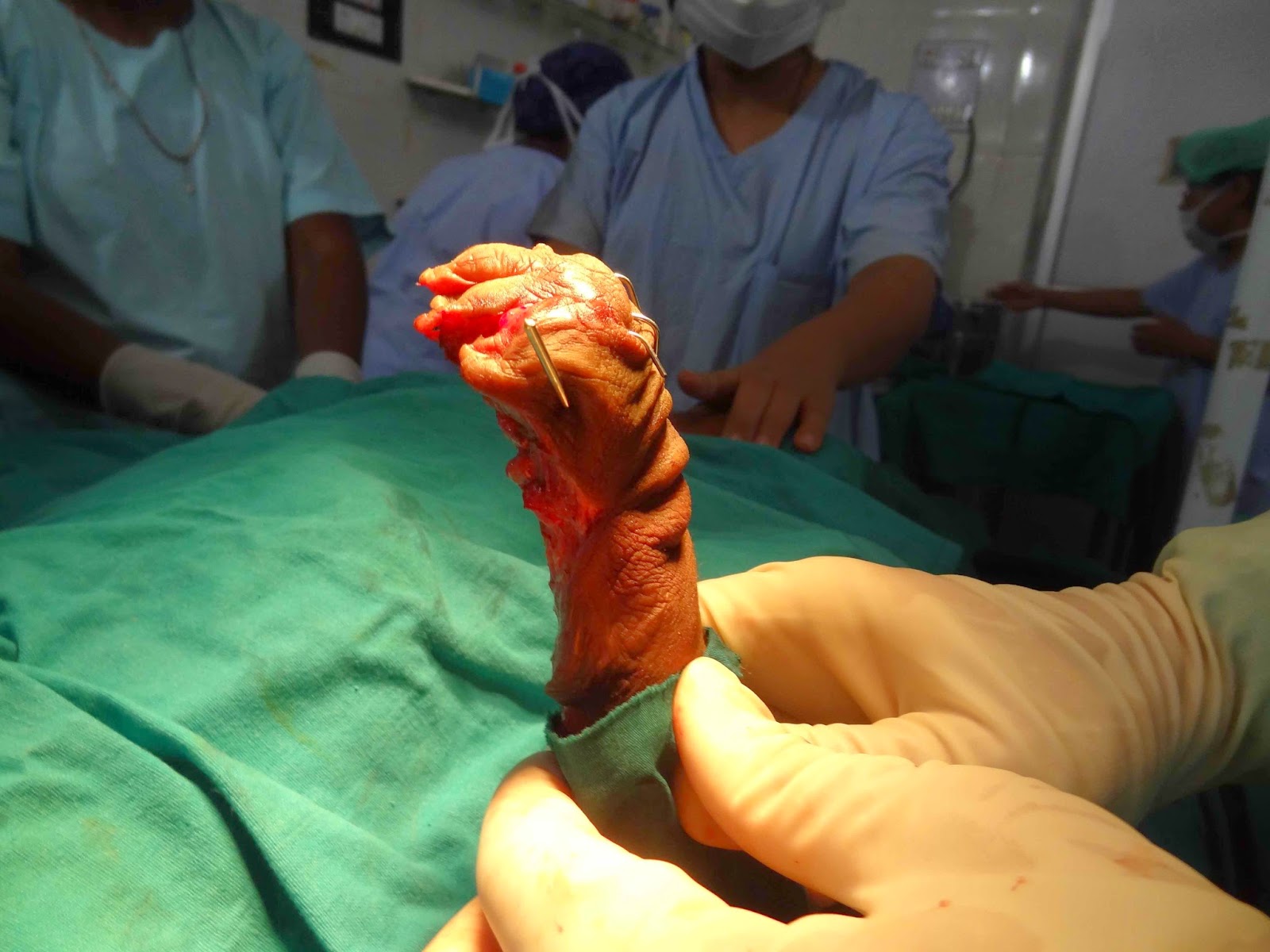


Dilip and Sheilesh.


Ashish tells us that we have completed 101 cases.

An extraordinary collection of human beings.


Ward round.


Ceremony round 1. Sheilesh.

Samrat sustained a nasty left ankle fracture five months before the camp. He was limping from the start and, despite his obvious discomfort, refused to return to Nagpur until the camp was complete. Respect. And gratitude.

Gopal.

Nitin.


Ceremony round 2.


The case with radial nerve involvement that I didn’t want to do.


We return to Amravati and spend the night at Avinash's new headquarters. Dilip talks deep into the night with Ravi. Four medical students came to this area many years ago and promised to serve those that could otherwise not afford such care. Three of them slept under the same roof that night. The fourth (Prem) was here a little earlier.

The camp takes its toll and, for a second year in a row, I leave with a nasty head cold that goes to my chest. I think about the new hospitals being built and imagine a bright and sustainable future for the local community. I think I would like to tell a different story next year. 


Avinash.


I board my plane at the newly renovated international terminal in Mumbai. With red eyes and a snuffly nose I take one last look at India. She gives me a wave and turns away. For she has other things to attend to.


The seating arrangement on Singapore Airlines flight SQ0423 is 2/4/2 (where / = aisle). The luggage compartments line up with the gaps in the row of seats. 

A pretty Indian hostess hands me a warm towel. 

I wipe my face and settle in.


Saturday, December 20, 2014

Saturday, November 29, 2014

Lemond V2 Boomerang


Winning, May 1994


If this is your thing then you’ve probably read or contributed to this thread:


Sunday, November 16, 2014

Superman


“Mr Johnson explains the point, rarely made clear, that cancer is an inevitable side-effect of being multicellular. Most of the cells in such organisms are capable of reproducing; the greater good of the organism requires that they be constantly and assiduously stopped from doing so. But the finely crafted locks intended to keep cell division in check wear down over time, and eventually give way. The result is a cell line whose proliferation gets out of control and, worse, dispatches colonists to other parts of the body.” 

Excerpt from the book review of “The Cancer Chronicles: Unlocking Medicine’s Biggest Mystery” by George Johnson. 
The Economist, Sept 14, 2013


“They call you Superman.”

“Excuse me?” 

“Oh, you know, your leukemia and stuff. That you recovered so quickly...”

“Umm... ok... So, your doctor tells me you have a problem with your hand. Tell me about that.”

“Well, doc, I fell and broke my wrist about three months ago, and now I’ve got this...”

I once had the nickname “Superman”. Or so I have been told. It was in reference to me having acute myelocytic leukemia (AML) and having recovered quickly after a bone marrow transplant. But, apart from a dogged determination and a slightly higher than average ability to deal with pain disappointment, there is nothing terribly remarkable about my abilities.

The donor for my bone marrow transplant happens to be my brother. Which means that his blood courses through my veins. Quite literally. The marrow that once produced my blood cells (red blood cells, white blood cells, and platelets) having been destroyed by two courses of chemotherapy and a subsequent course of total body irradiation. In other words, the medical team that specialises in such matters, poisoned me (twice) and then nuked me. Thankfully they also stimulated my brother’s bone marrow (after checking for compatibility) so that stem cells from his marrow overflowed into his bloodstream. They then took some of that blood and gave it to me. At the time of the transfusion (or “transplant” as the blood now contains a large number of pluripotent stem cells) I didn’t have any white blood cells to repel a foreign invasion so my brother’s stem cells were able to resettle in my marrow cavities with nary a peep of resistance. Within days they started producing the full gamut of blood cell lines. Those squatters still reside there.

So, it’s my body. But with my brother’s blood. To make this clear: should I commit a crime and accidentally drip blood at the scene, my mouth swab would reveal a DNA signature quite different to that from the blood I leave behind. And, should it come to that, on the basis of DNA evidence, I walk away scot-free. And my (nonidentical) brother takes the rap for my misdeeds. 

Suck on that Sherlock.

Leukemia, like all cancers, is a horrible, emotive word. It means you have a pretty high chance of dying sooner rather than later. Not all leukemia’s are the same. And not all leukemias are treated with a bone marrow transplant (BMT). BMT has significant complications. Assuming you survive the first few hurdles and make it to the start line (ie you don’t die from toxic side-effects or from some overwhelming infection during induction and consolidation), there’s that matter of graft versus host disease (GVHD). GVHD is where the transplanted blood cells recognise the host as foreign and strike up an immune response to the various organs/ systems of the host. A “little bit” of GVHD is generally regarded as beneficial especially if the disease being treated is aggressive or incompletely controlled. The theory being that a small amount of GVHD will recognise and destroy any remnant leukemic cells and thereby reduce the risk of recurrence. Any more than that “little bit” is bad. Significant GVHD is a truly wretched situation. 

Just over fourteen years ago, TM, a girl my age, sat me down and told me about her transplant experience which took place a year before my scheduled transplant. She told me that BMT was a big deal but reassured me that things would be fine. That the medical team and staff were exceptional. She touched my arm, smacked the back of my bald head, and told me that there aren’t many occasions that we get the opportunity to reflect on what is important in life. Fourteen years ago I had my transplant on the same day, in the very same HEPA-filtered room as TM. A few years later TM passed away from complications associated with the treatment of GVHD. In 2000 the survival rate following BMT was 60%.

Since my transplant I have seen a number of other people with leukemia either as a recommendation through the Leukemia Foundation or as patients during the course of doing my job. On one occasion I was approached by a well-heeled, well-informed lady whose 14 year old son had just completed the consolidation phase for AML. She had a clear understanding of the next step (a bone marrow transplant) and had heard that I had made a “flawless recovery” (not entirely true). That I had integrated back to a normal life free of medications and complications. We talked about her son: how he was coping at school, whether he was still playing sports, about the medical team treating him, and about his experience with chemotherapy and radiotherapy.

But she was here to talk about my BMT. She wanted to know what she could do to make sure her son got the same result. She leaned forward to emphasize the fact.

“So, what did you do?”

I was stumped. My noncompliance came to mind. Like others whose proximity to a predicament lends a belief that we know more than the learned experts who have studied the situation but never lived it (think diabetes, asthma, smoking...) I too thought that I could make a better call on certain aspects of my treatment. I didn’t tell her that. I mumbled something about having a good diet, family support, staying in contact with friends, the importance of having distractions...

“Yes, yes, but what did you do?”

I didn’t do anything.

I just didn’t die.


Do you see this as a rule or a recommendation?


How about this?


Is this man a legend or merely a superb athlete?


How about this guy?


Or this guy? 


The Lugano Charter was drafted in October 1996 in the southern Swiss city of Lugano (right on the border with Italy) and forms the backbone of the UCI’s technical rule book outlining what is allowable in bicycle racing. The UCI, of course, being the Union Cycliste Internationale (cycling’s governing body) for the edification of those unfortunate enough to have blundered upon this blog without a bicycling background. And on that note (mindful that this blog is often impenetrable for those that don’t ride a bicycle and mostly irrelevant for those that do), the defining moments linked above are Greg Lemond 1989, Francesco Moser 1984, and Chris Boardman 1992: competition cyclists whose results caused consternation amongst the suits at the UCI.

The Lugano Charter was the UCI’s response to the flurry of technological innovations (and a couple of novel cycling positions) deemed to provide their protagonists an unfair advantage against other bicyclists who raced against them. A master plan by the UCI to (re)assert control after a decade of decadence and to return bicycle racing as a measure of human ability before it morphed into some kind of sanctioned pageant for a technological arms race (notwithstanding the inevitable conflicts trying to align such an ideal to a sport inextricably intertwined with technology). At the turn of the century this grand covenant of rules and regulations got carved in stone.

These rules, which specifically govern road and track racing, are particularly onerous because speed (ie winning races) in these disciplines is hugely affected by aerodynamics. And significant gains were being realised in the 1980‘s - 1990’s with advancements in carbon fiber technology and experiments in novel cycling positions. The Lugano Charter put an end to it. The vagaries of what is, in essence, a philosophical position (see links above and Oliver Penney’s excellent commentary here) and the general lack of technical knowledge amongst the commissaires engaged to administer it didn’t particularly endear the UCI overlords to the community they served. That the UCI, under a change of guard, has started to look into the charter’s relevance in contemporary, blue-ribbon racing events is generally regarded as a good thing.

Why?


Mr Brain Cookson. UCI boss since Sept 2013.


One year later 18 September 2014.
Jens Voight becomes the first to add his name alongside the list of luminaries to hold the Hour record thanks to the UCI’s amended rules. And Trek.


A lot of things don’t make sense. And it’s difficult to pass judgement without understanding the full context of the events that lead up to it. Like why so many people drink coffee. Or how Mr Verbruggen and Mr McQuaid (the UCI’s old guard) managed to preside over some of the darkest days in professional road racing: doing nothing when rumours of impropriety were circulating; denying everything when rumours became fact; then entrenching their positions when professional road racing sunk to the credibility of a Jamaican sprint team (but with white people and better scenery) managed by a caricature of Sepp Blatter and his FIFA friends. 


Hein: “I think we should tell them that we fucked up. Like really fucked up”
Pat: “Just smile at the camera.”
It could have been so easy.


The Lugano Charter, despite some failings in application, was a good idea in the context of its time. Yet when the resolutions were ratified they were soundly criticised by the cycling industry as being heavy-handed: a blunt tool for stifling innovation. Being young (at the time) and identifying myself as a clichéd road cyclist I too bought the industry view and thought that the UCI was being unnecessarily backward. Lemond was a legend. The first non-European to win the Tour de France (1986) and doing so again in 1989 on no less than on the final day, making up a 50 second deficit and winning by a mere 8 seconds. A superman that defied the odds and beat a stronger man by finding a smarter way of doing things. And there’s the rub. In 1989 Laurent Fignon was the better rider. And he lost. 

Eighteen years ago the UCI (whose very existence, we must remember, is to govern professional cycling) drew up a set of rules to level the playing field. It is now known as the Lugano Charter. Sixty two years earlier, in April 1934, the manufacturers of “upright bicycles” (ie the type we now ride and generally accept as a “bicycle”) successfully lobbied the UCI to ban recumbent bicycles from racing against them.


On the 7th July, 1933 a cat 2 cyclist (a nobody named Francis Faure) broke Oscar Egg’s hour record. 


Like the recumbent ruling made sixty two years before it, the 1996 Lugano Charter set the context in which road and track racing could take place from 2000 onwards. It made sense in principle even if certain technical aspects within it didn’t. That such rules play a pivotal role in the desirability, marketing, and (ultimately) the sales figures of bicycles and their related paraphernalia is beyond doubt. Recumbent bicycles have certain shortcomings for sure but the 1934 ruling did much to diminish their presence and quietly nudge them to the fringes of the bicycling community. The (inexplicable) banning of Cinelli’s wonderful and immensely popular Spinaci bars (along with copies made by 3T and others) from mass start races in 1997 sent the company, founded fifty years earlier, to the wall. But to say that such rules stifle innovation is a failure to recognise the capacity and flexibility of human ingenuity.


The 2012 Giant TCR Advanced SL0. A world-class race bike for AUD $7999. And UCI legal to boot. With vertical integration not seen since the days of Raleigh, when this 900lb gorilla of the bicycle world announces that you will ride 650B/27.5 wheels off-road in 2014 then 
well, we'll leave that topic for another day.


Fastest human powered vehicle: Velox 3 ridden by Sebastiaan Bowler to a speed of 133.78 km/h (83.13mph) at Battle Mountain, Nevada 
(15 September 2013).


Do you see this as a rule or a recommendation?


Regulations that restrict technology in a technology-based sport need updating from time to time. That the UCI relaxed the draconian rules for the hour record in May and is currently rumoured to be considering allowing disc brakes for road racing and dropping the (now antiquated) 6.8kg weight limit can only be seen as a good thing. Most of us want to see a level playing field. And many of us want to see rules that are relevant to our lives. 

In a world where the limits of human physiology are clearly determined, racing statistics readily calculated, and money buys everything from top-end race kit to in-depth knowledge from veterans, experts, and tech-geeks, we still want something that excites us. A competition where winners win by talent, endeavour, or blind luck. Or perhaps all three as Steve Bradbury showed us in 2002. 


Where we are now leaves little room for one person to stand tall above all others. Yes, there are many exceptional people. But no superman. At least not one that doesn’t raise the spectre of cheating. Professional sport isn’t the real world. It’s a proxy for ideals we want to see in our lives. Strength, skill, courage, determination, confidence, teamwork, attitude... so why not add ingenuity into the mix? Shake things up a bit. We have come a long way over the past fourteen years. Information is everywhere and change happens quickly. The rules should reflect that. 

Critics of the Lugano Charter say that it stifles innovation and that it is ambiguous for a technical document. The UCI counters that the charter is a philosophical position to ensure the sport of cycling remains one that respects human athleticism. 

The philosophy behind the Lugano Charter did not stifle innovation. It took away superman. 

For superman doesn’t really exist. 

We imagine him. 


Saturday, November 1, 2014